Why Grass?
Reviving a Tradition
Grass courts are expensive, seasonal, and demanding. Every practical argument points away from them, and the American tennis industry abandoned grass decades ago. QCTC built them anyway. Grass is where the game began, where its greatest championship is still played, and where serve-and-volley and the low skidding slice survive in their most complete form. Established in 1975, the club built the region a place to play the game’s oldest surface — with Bush Turf and 4 Most Sport Group, and from engineered ground.
The Site
A Court That Traveled a Thousand River Miles
The material beneath these courts did not come from the lot they sit on. It began as red clay, mined in western Pennsylvania, barged down the Ohio and up the Mississippi to the port of Rock Island, then carried overland to Milan, Illinois, where it was blended with Muscatine river sand and soil into a single engineered rootzone. An unusual lineage for a playing surface — measured not in seasons but in river miles.
Starting From the Ground Up
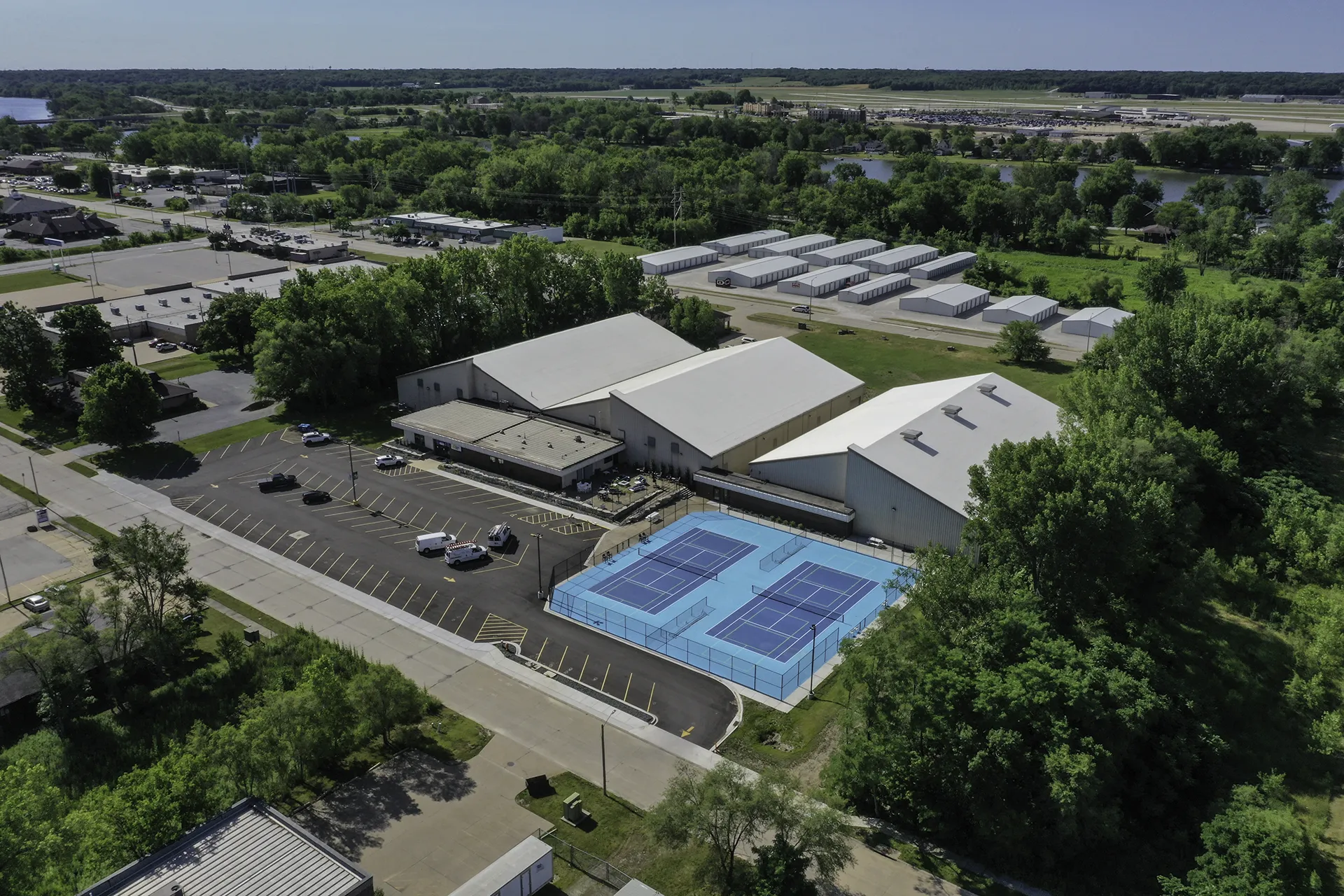
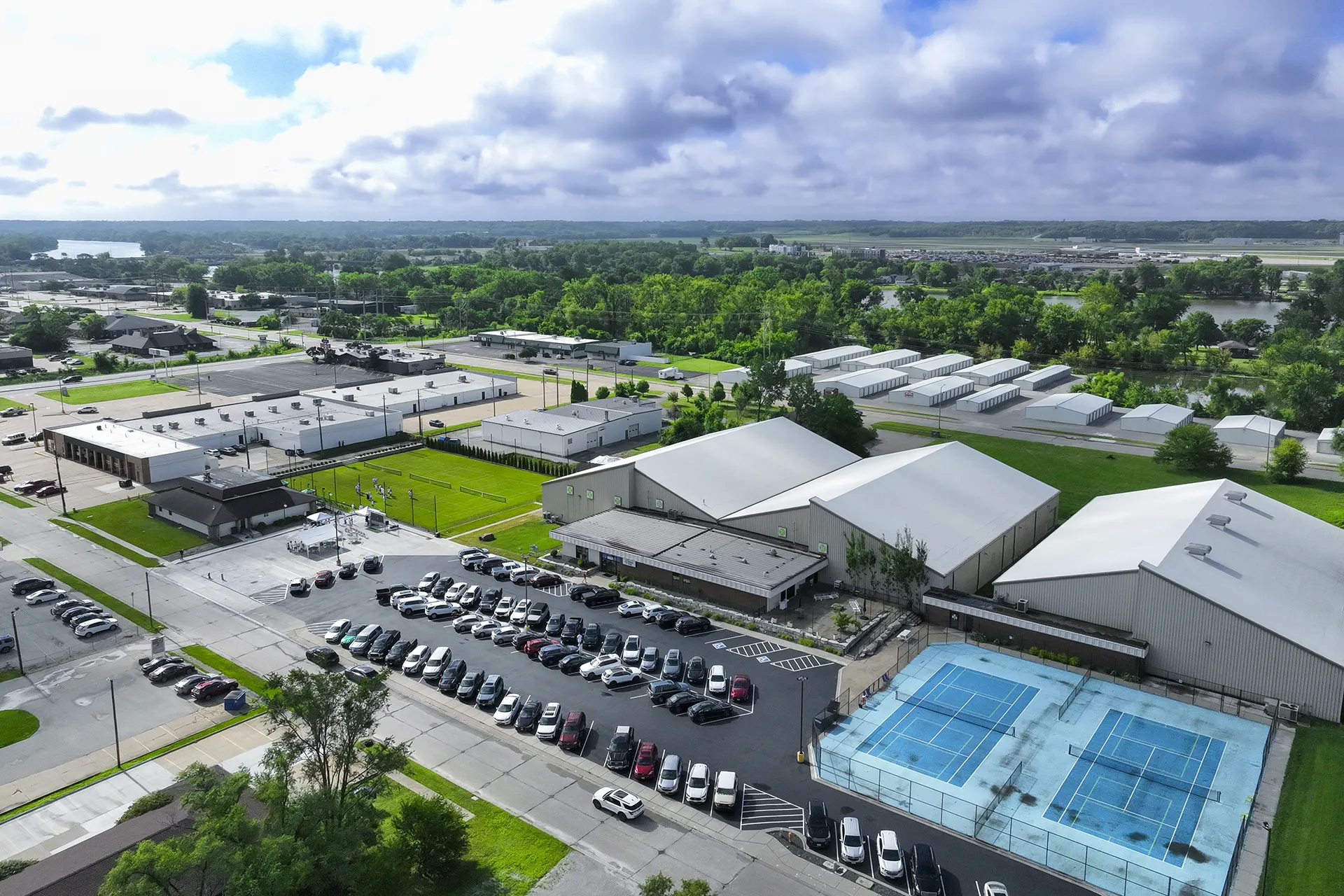
The courts sit beside the main facility on 47th Avenue in Moline, just off I-80. Three courts, side by side, each ringed by 15 feet of runoff. The footprint demanded precise grading before a single blade took root — water needed somewhere to go, not just off the surface but through it.
Drainage
The Drainage System
Beneath every court sits twelve inches of rounded river rock. Rounded, not crushed — deliberately. Rounded stone leaves larger, more consistent voids, and water passes through it freely during the seasonal deluges that define a Midwestern summer. The grade directs runoff toward subsurface collection rather than letting it stand, so the courts shed rain fast and recover quickly.
The Rootzone
An Engineered Growing Medium
Above the rock sits an engineered rootzone of imported clay, sand, and soil, laid by GPS-guided leveling to a flatness the eye cannot detect. Sand carries the water and firms the surface; clay and soil bind the profile and hold moisture where the roots need it. No part of the profile was inherited from the ground — every component was selected, measured, and placed.
An 80/20 Rye and Bluegrass Canopy
The surface is an 80/20 blend of Perennial Ryegrass and Kentucky Bluegrass. Ryegrass establishes quickly and recovers from divots; Kentucky Bluegrass spreads laterally, adding the density that carries the turf across a season. The courts are maintained to University of Massachusetts turf standards. Wimbledon plays on pure perennial ryegrass; QCTC’s blend adds Kentucky Bluegrass, a deliberate concession to a Midwestern climate rather than an English one.
Irrigation
The Irrigation System
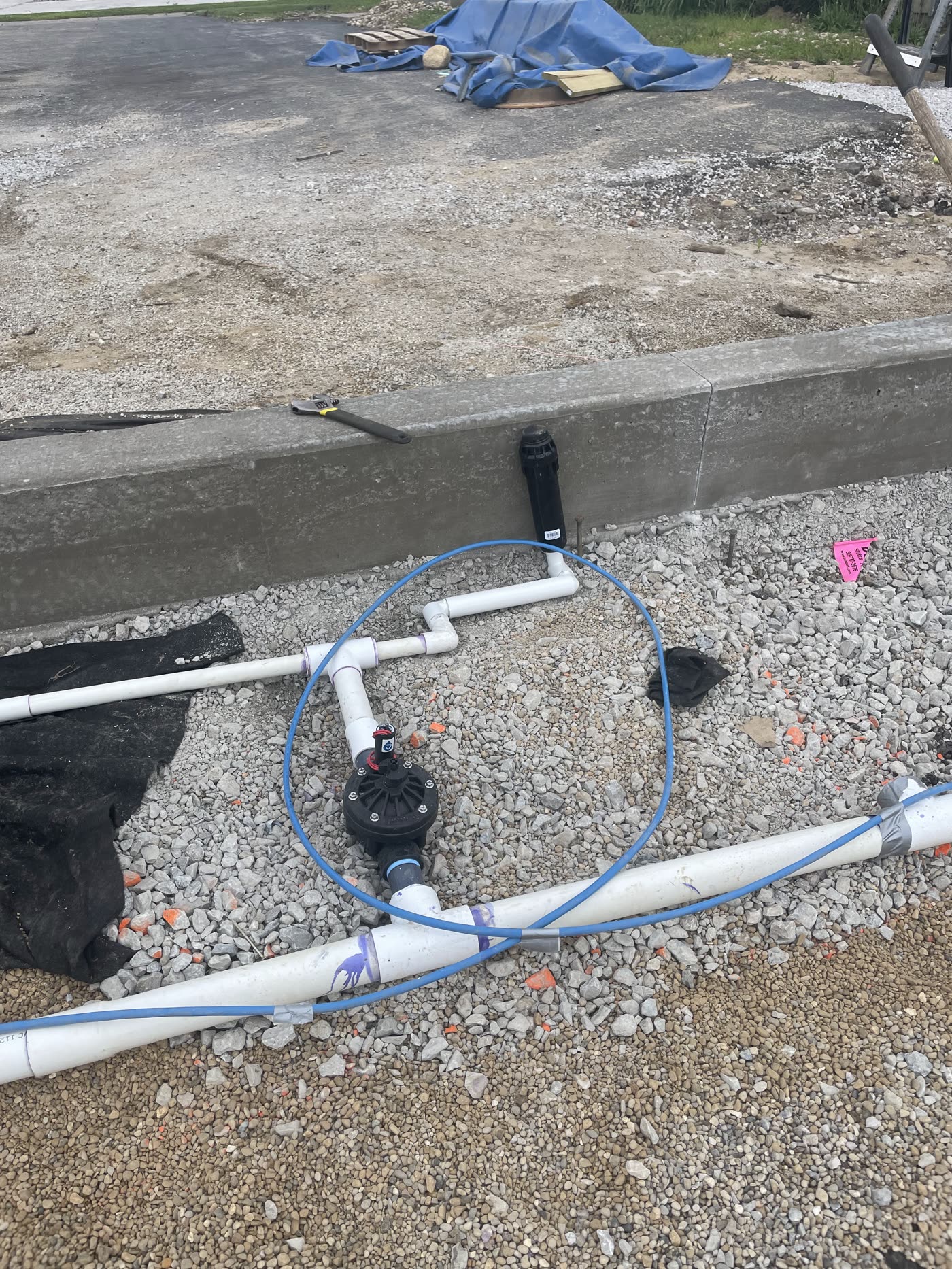
Grass courts live and die by water. QCTC manages the balance with a RainMaster irrigation system, calibrated to each week’s growing conditions. Paired with the free-draining rock base below, it lets the courts absorb heavy rain and endure dry stretches while holding playable through spring and summer.
Before
After
Photos
Our History in Photos
From bare ground to green — a look at how the lawn courts came together.
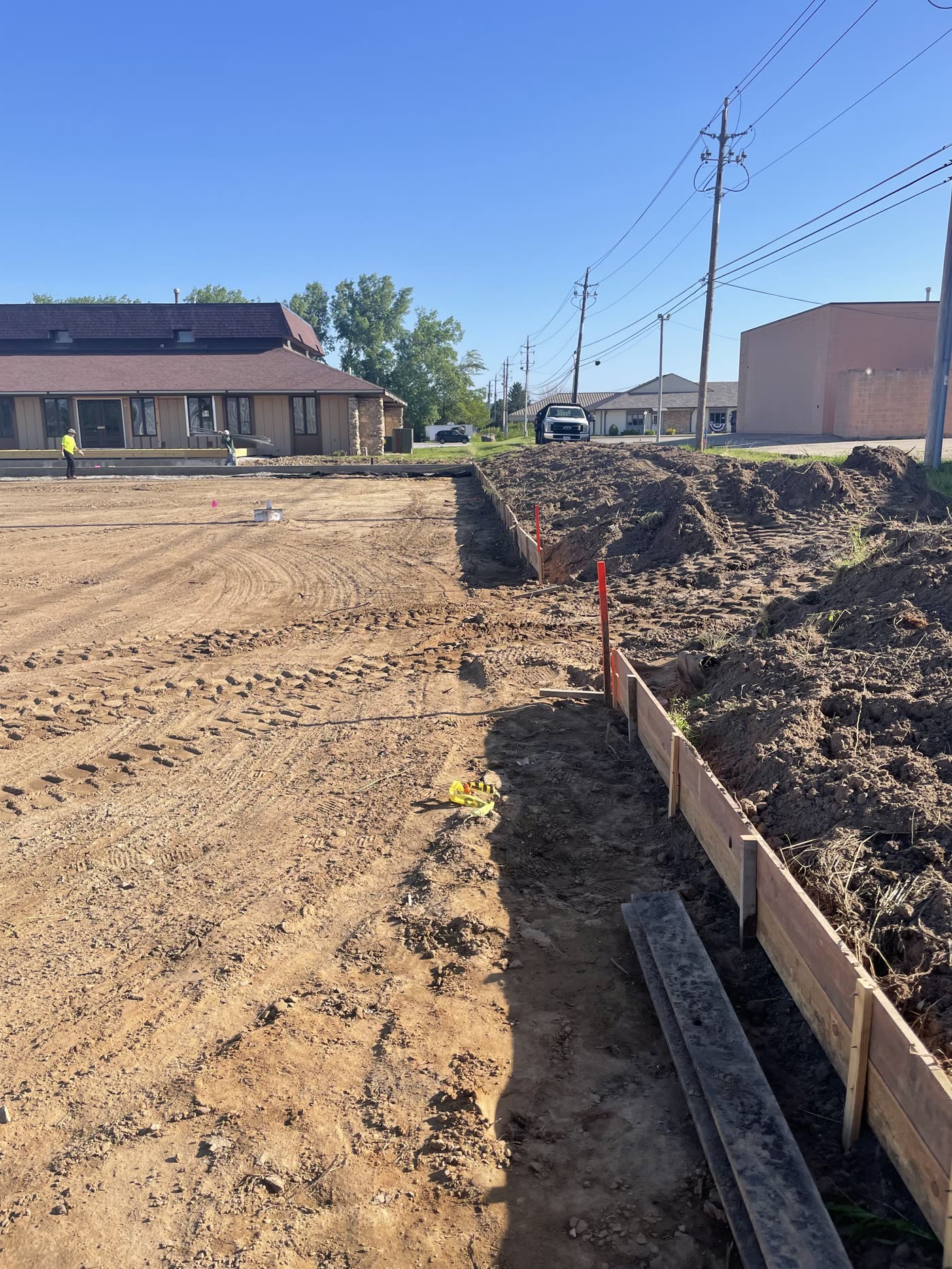
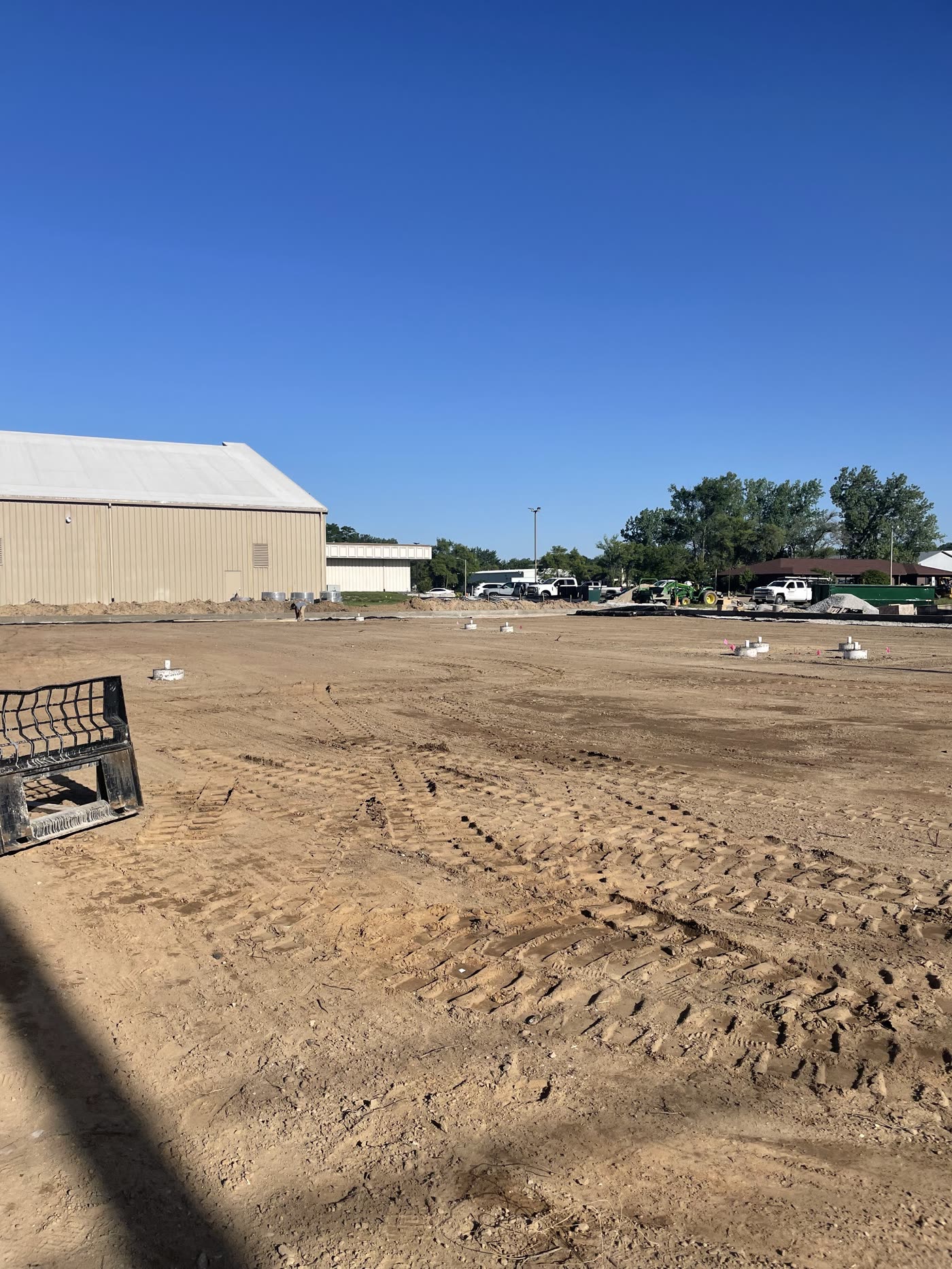
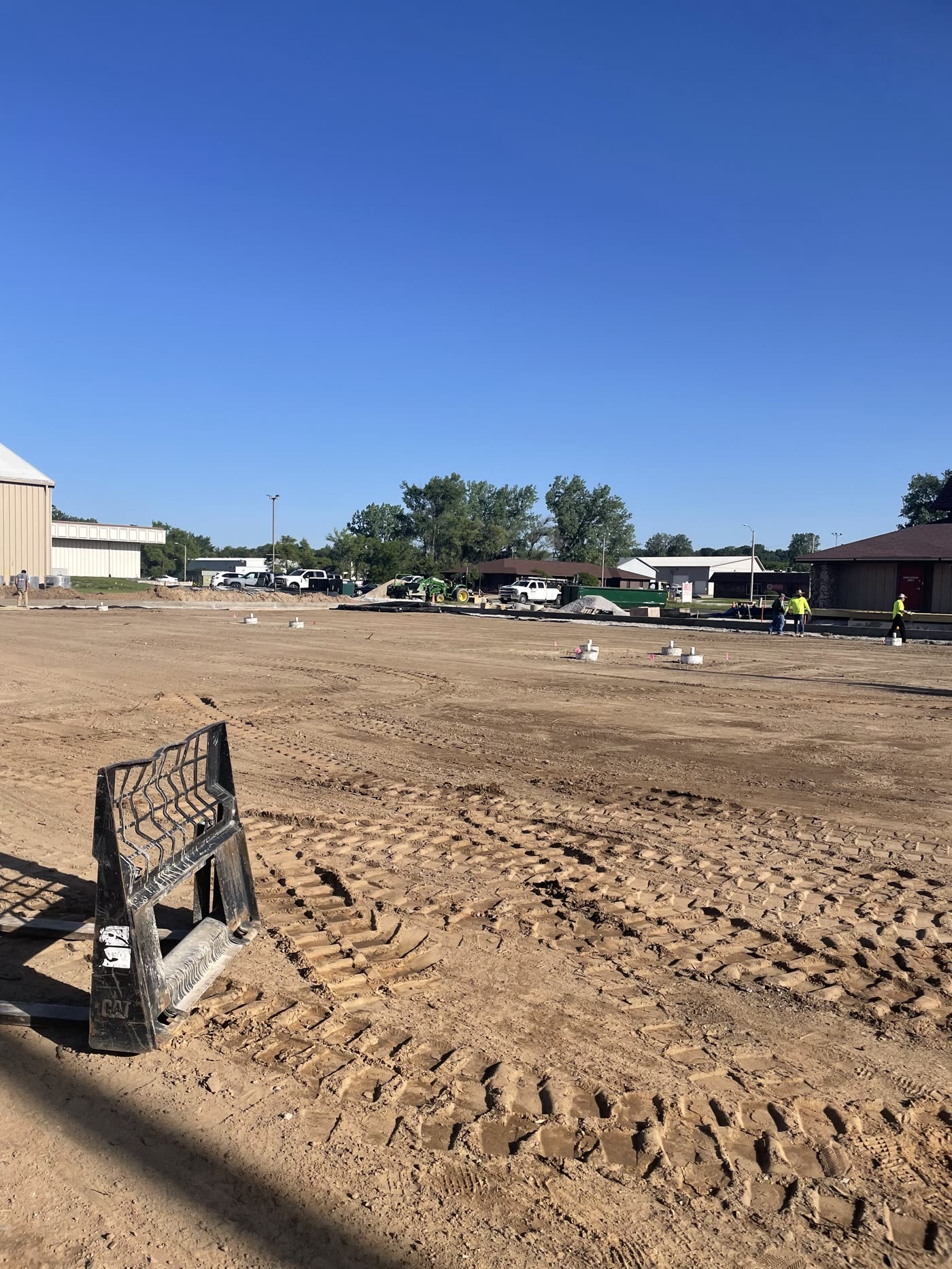
Earthwork
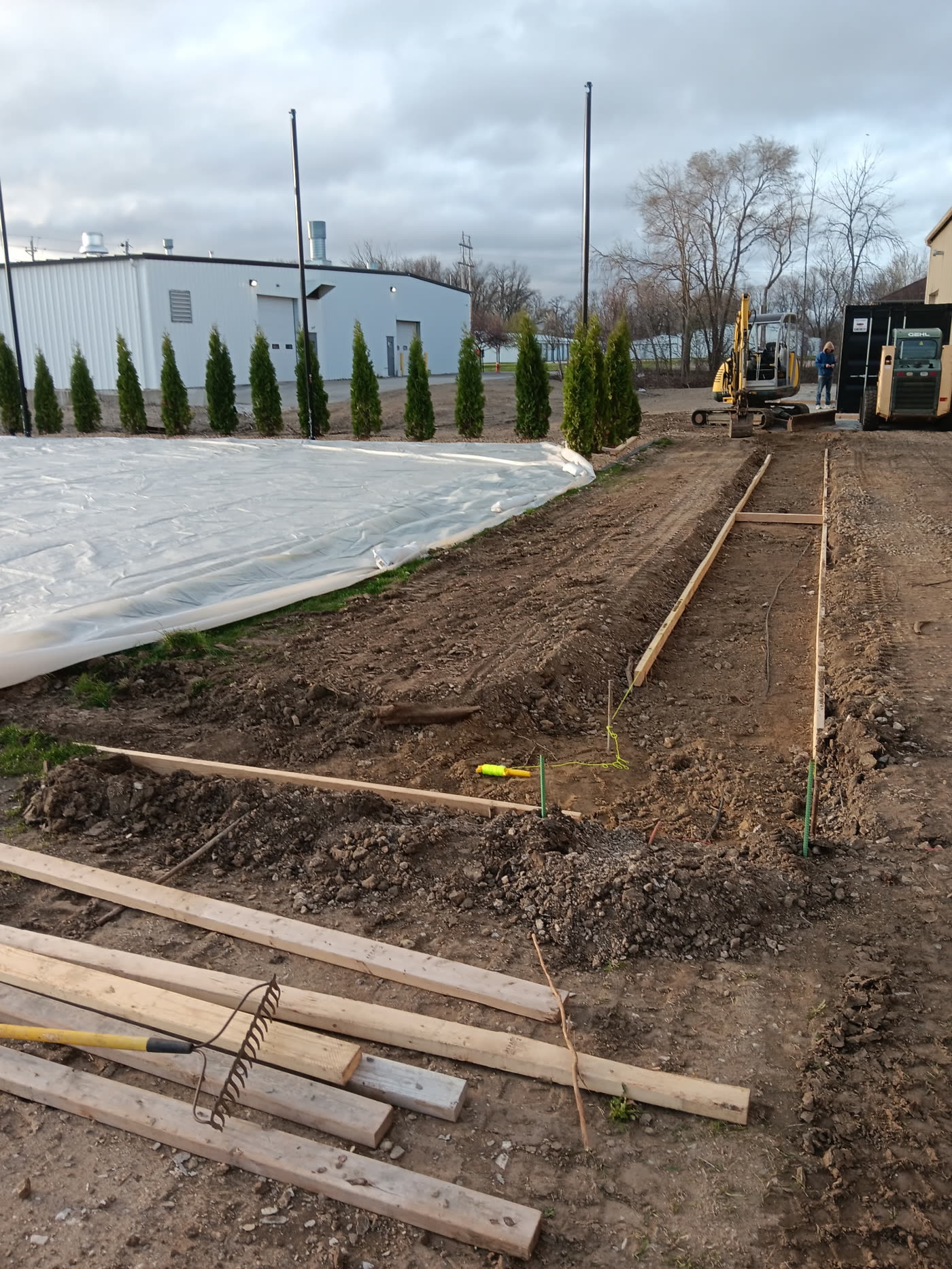
Starting From the Ground Up
The pad takes shape beside the Lawn Tennis Clubhouse — grading and excavation before anything green goes down.
 |
 |
 |
 |
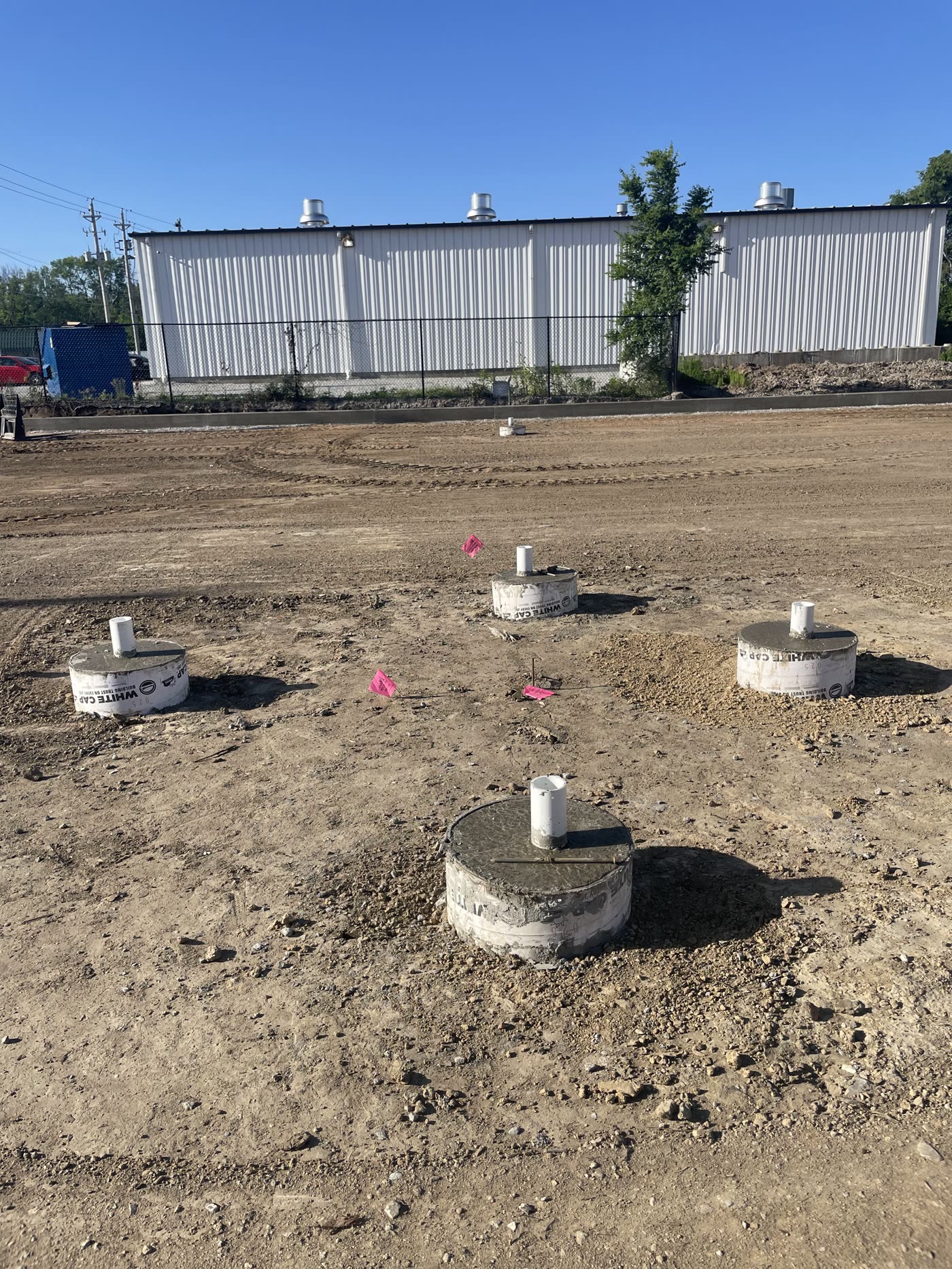
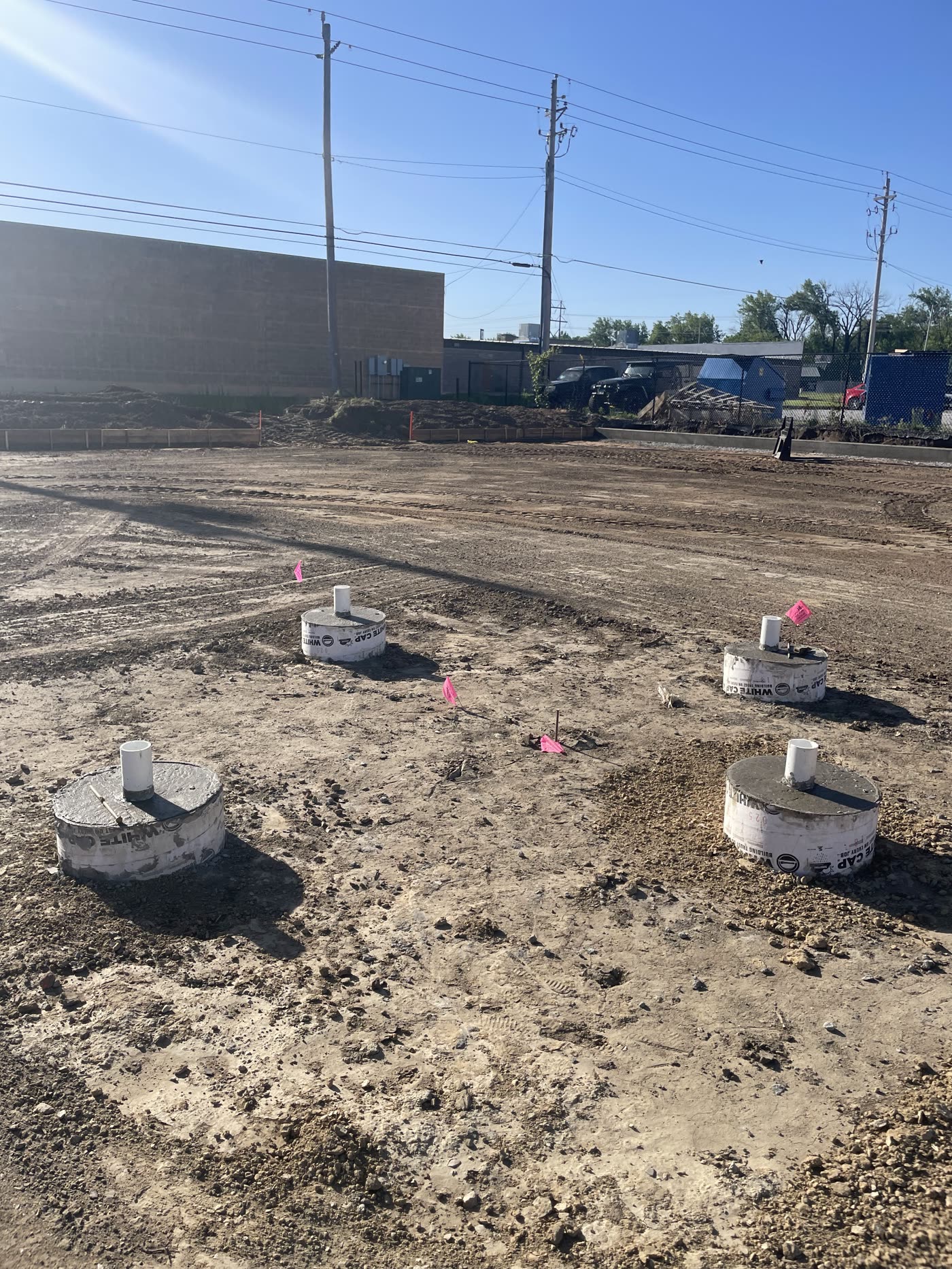
Footings
Structure Before the Green
Concrete footings and sleeves set so fencing and court hardware hold through Midwestern seasons.
 |
 |
Drainage
The Drainage System
Twelve inches of rounded river rock beneath every court — voids that move water fast through a Midwestern summer.
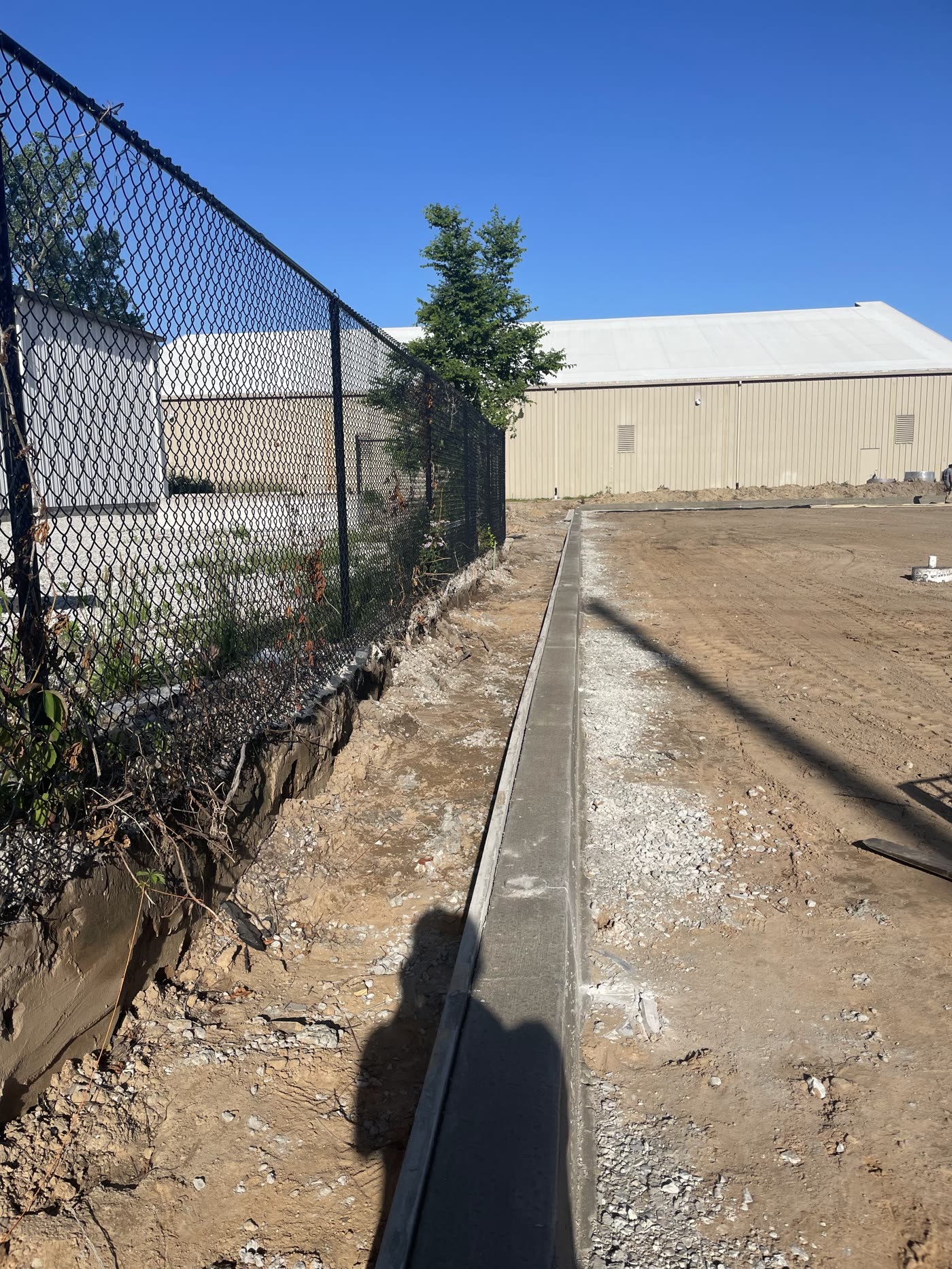 |
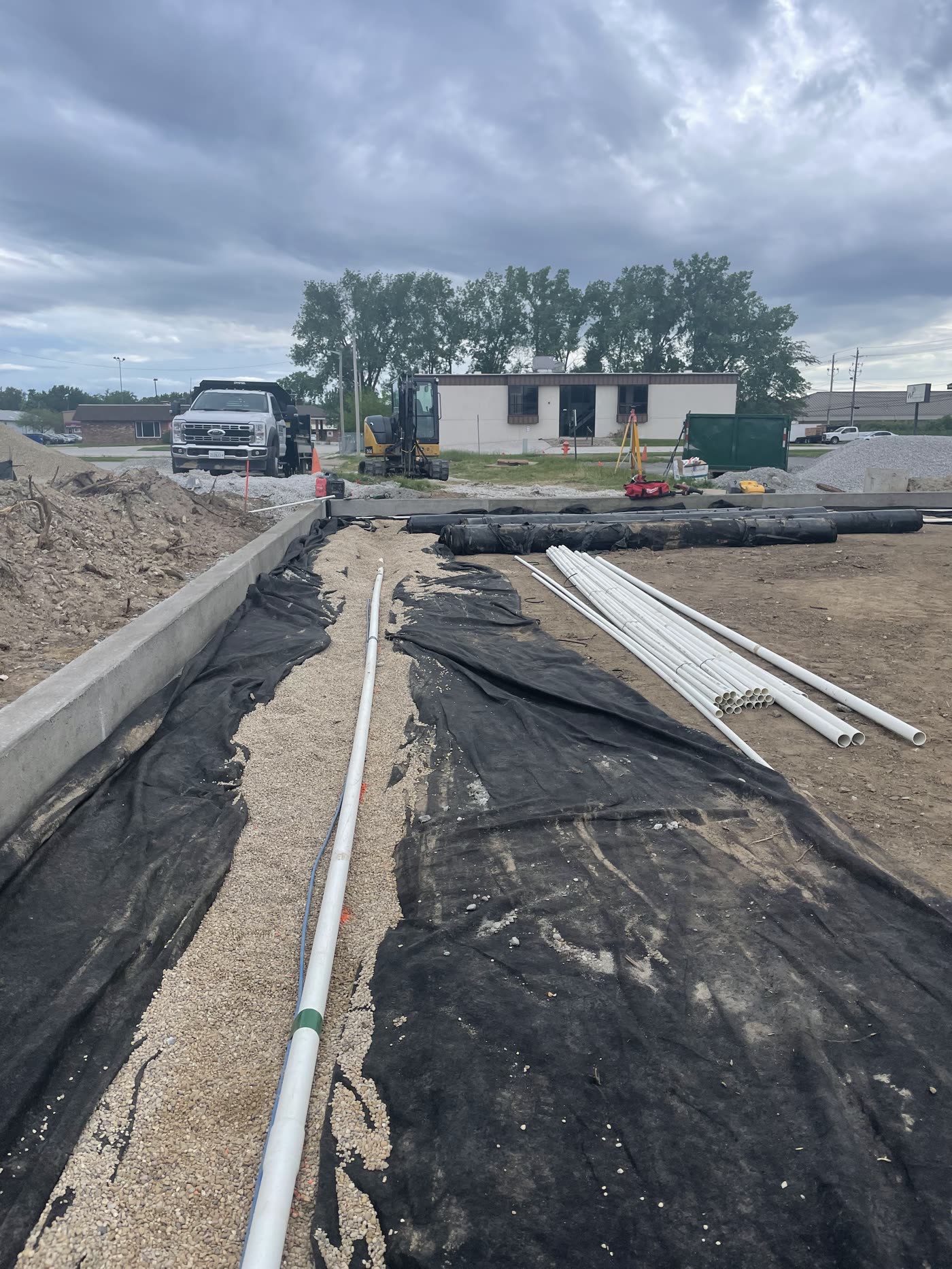 |
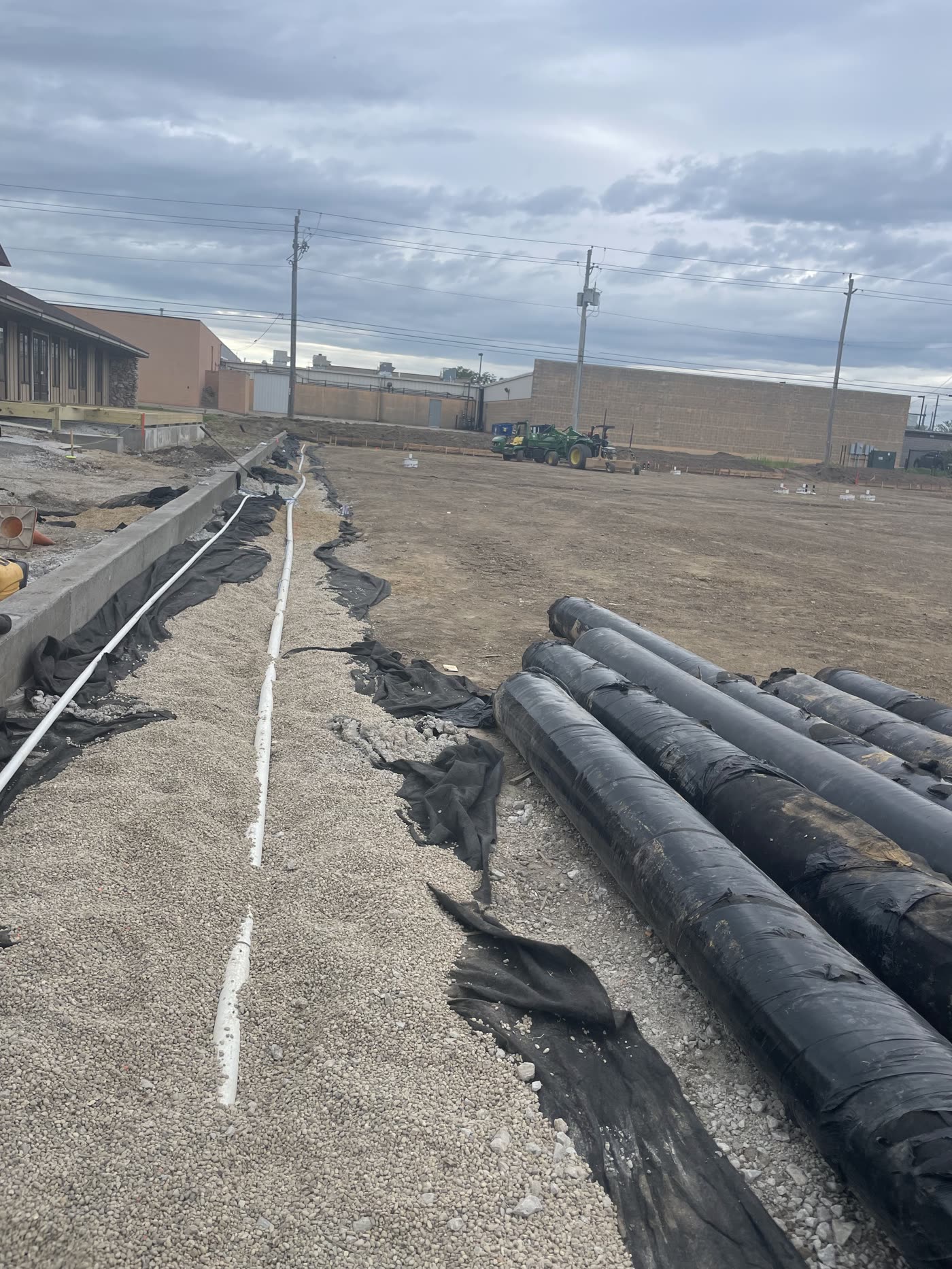 |
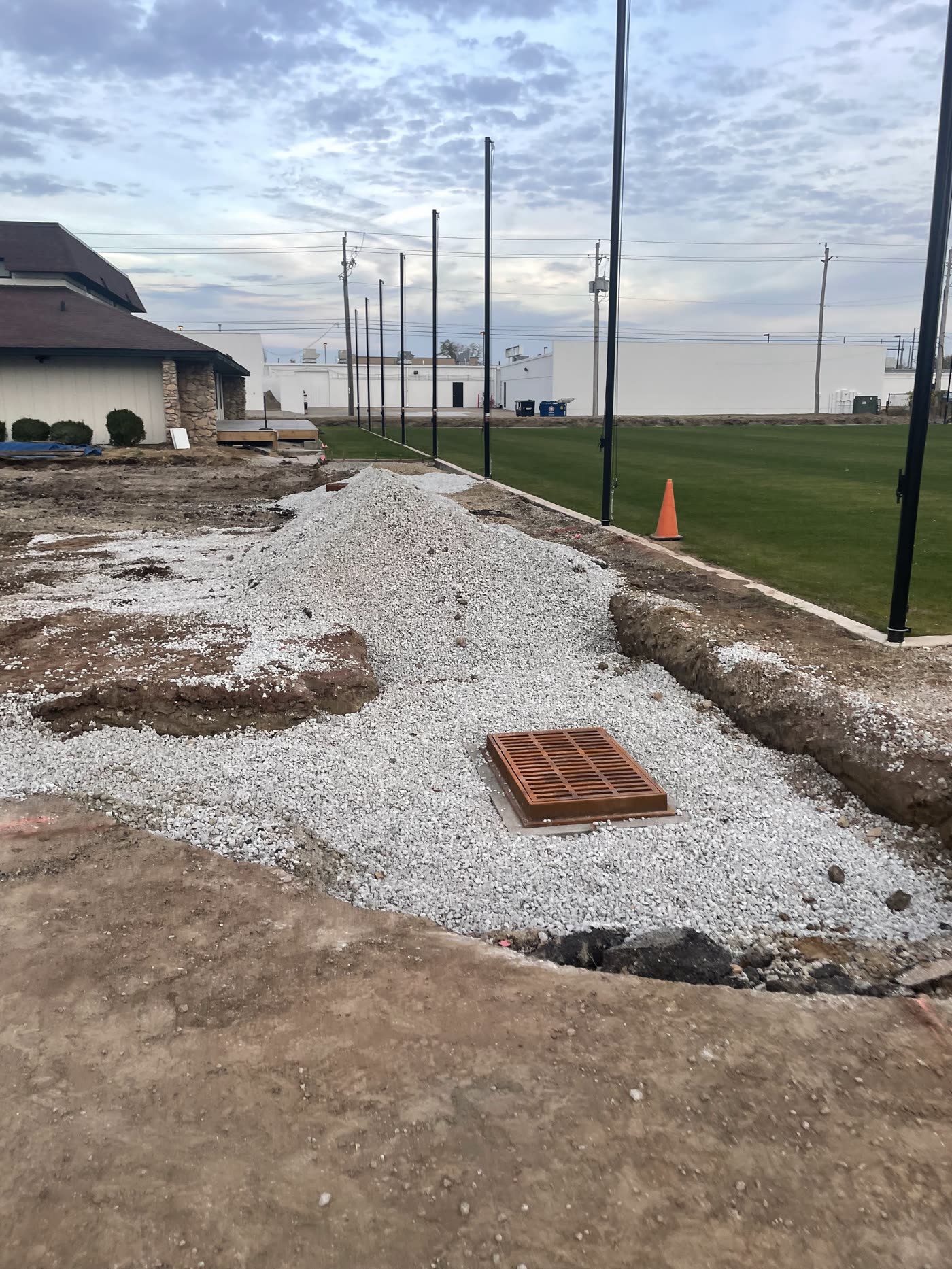 |
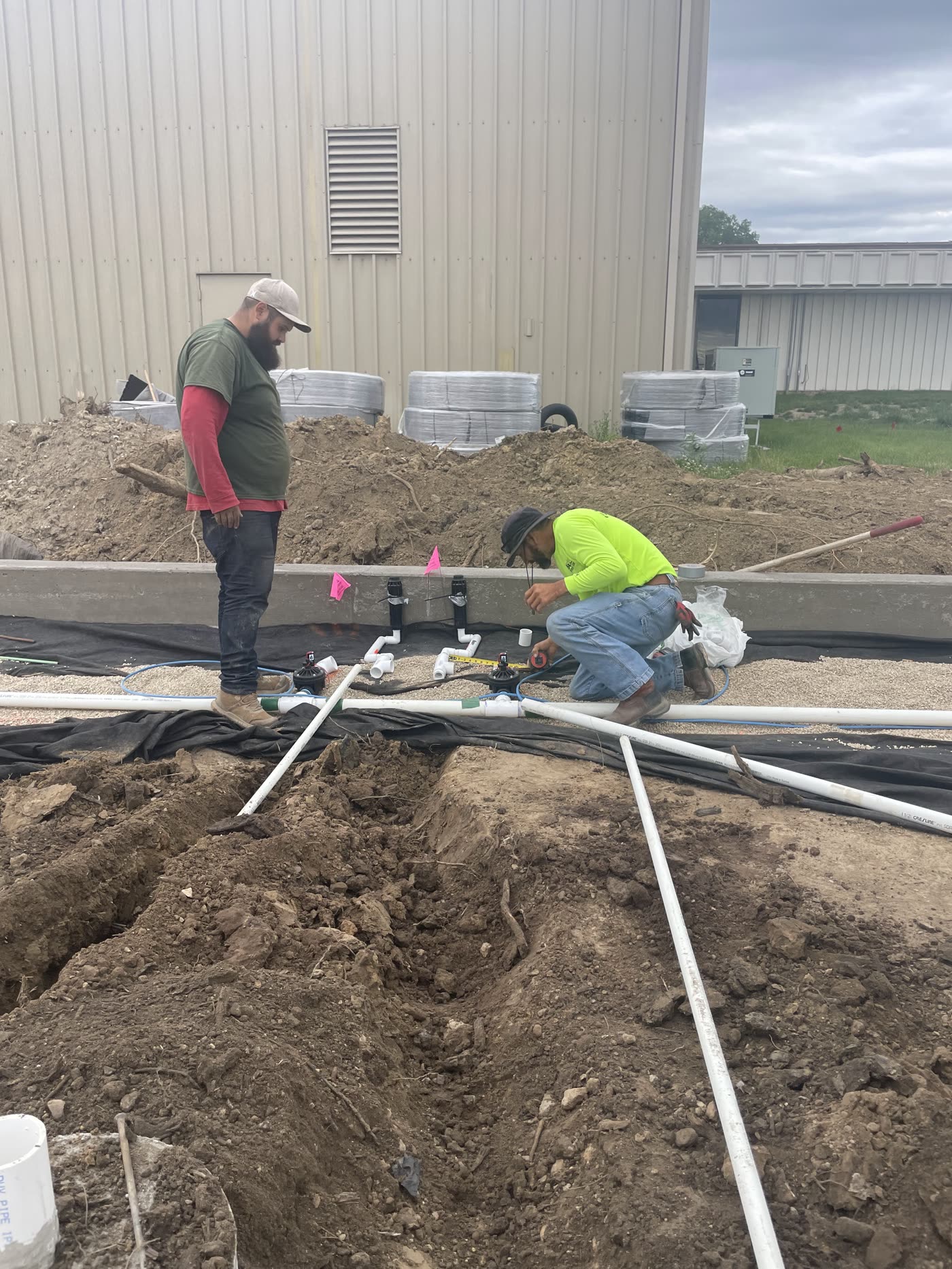
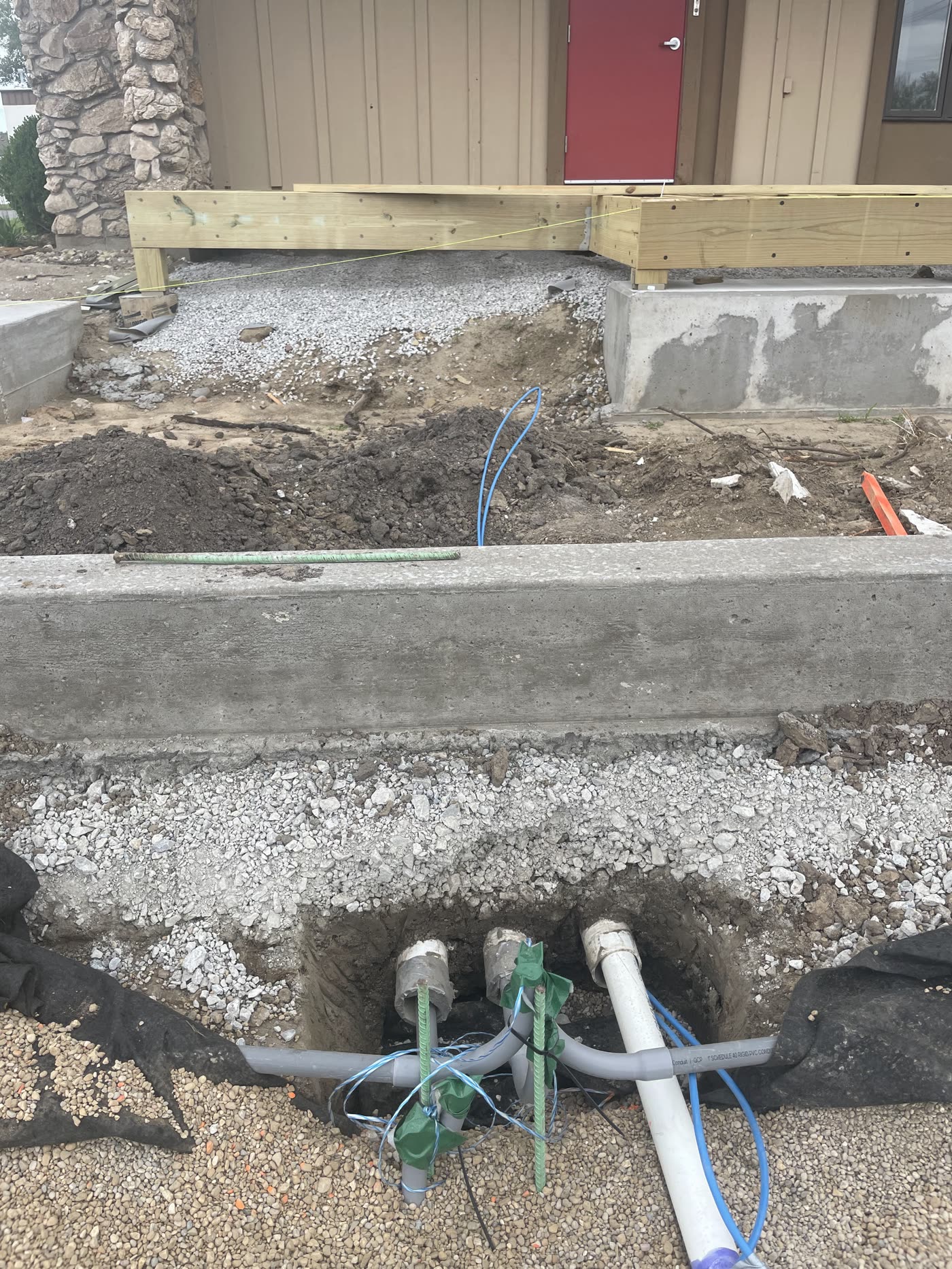
Irrigation
The Irrigation System
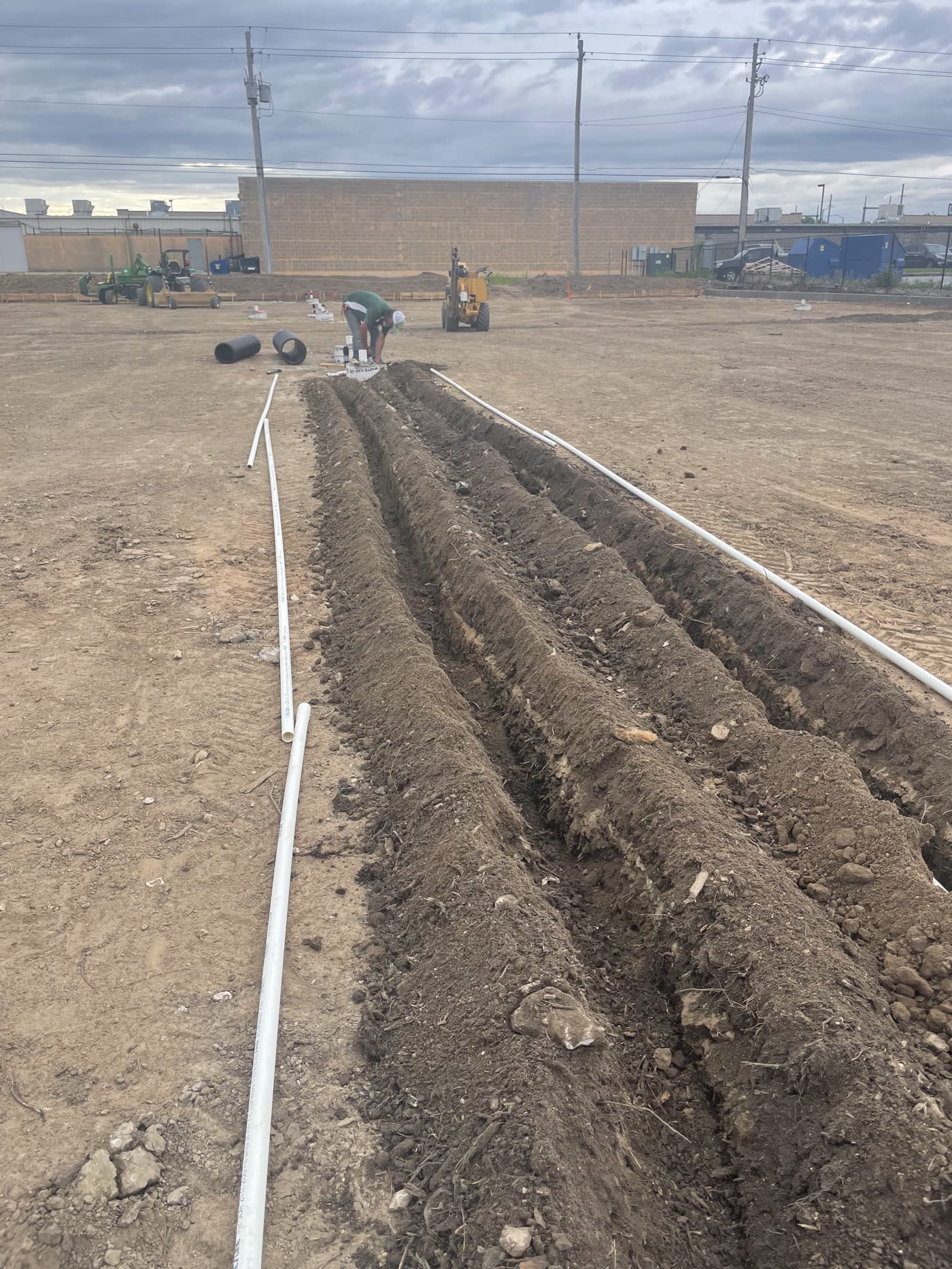
The RainMaster system goes in — trenches, pipe, and valves that keep the courts playable through wet weeks and dry ones.
 |
 |
 |
 |
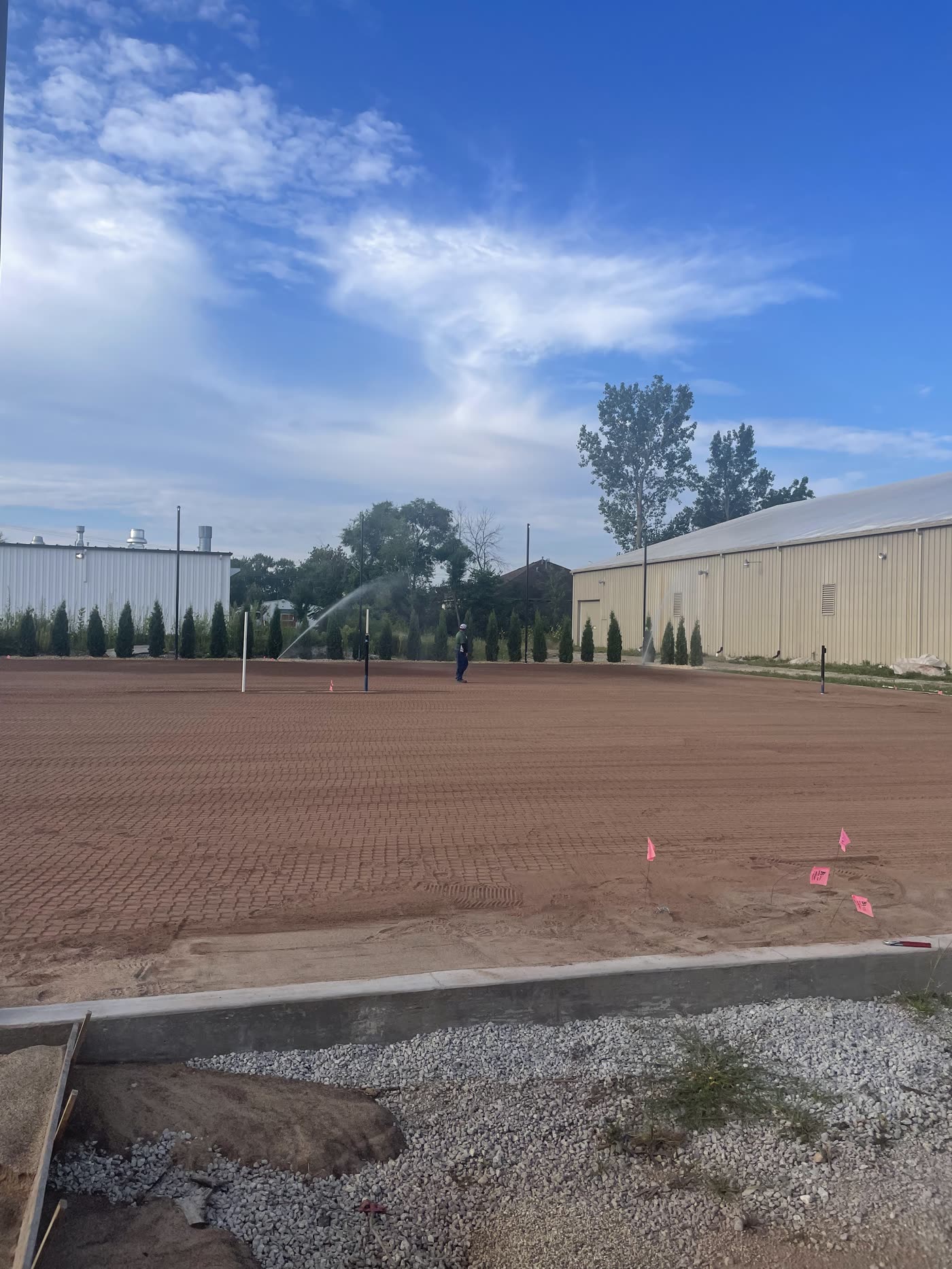
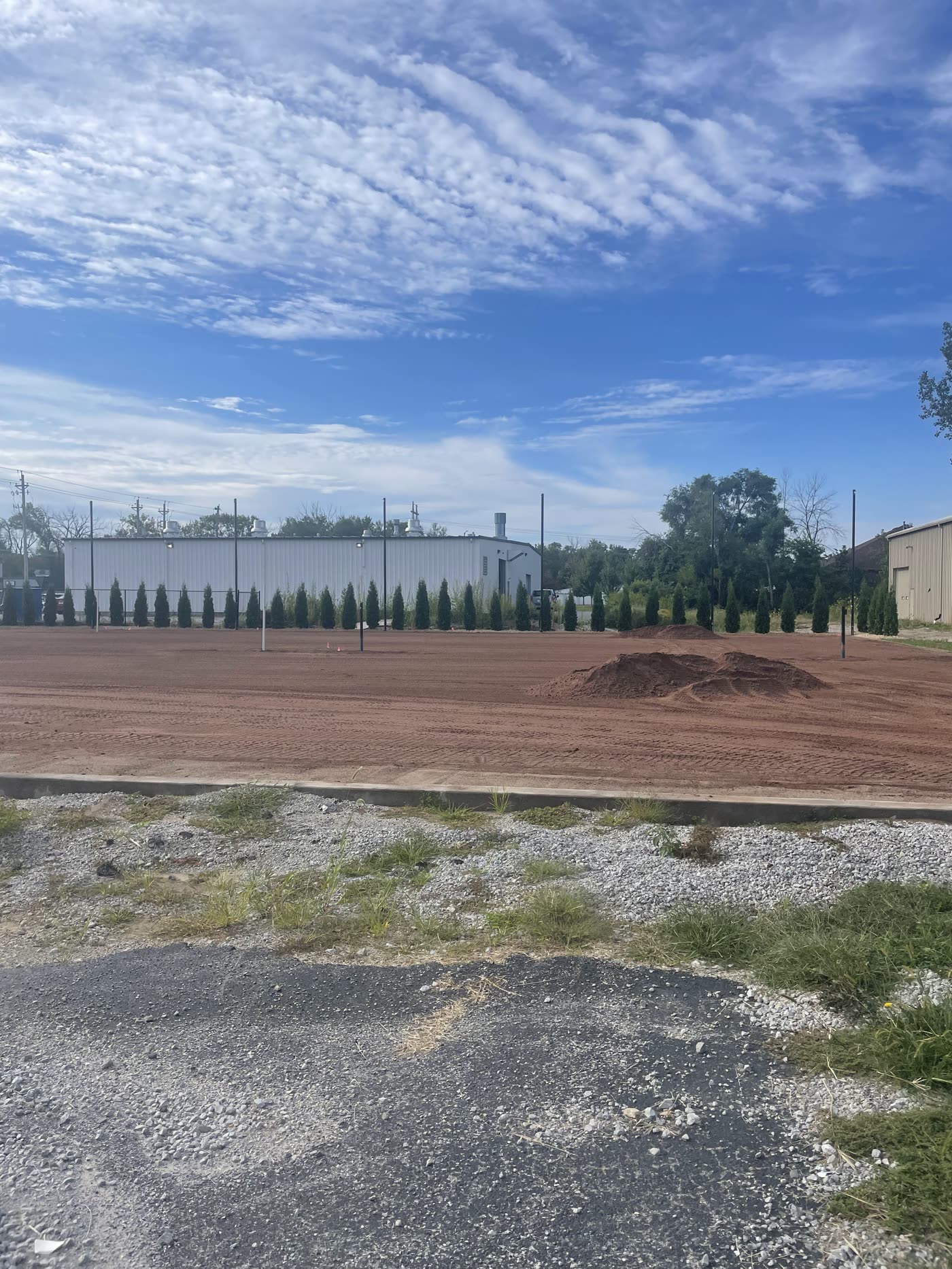
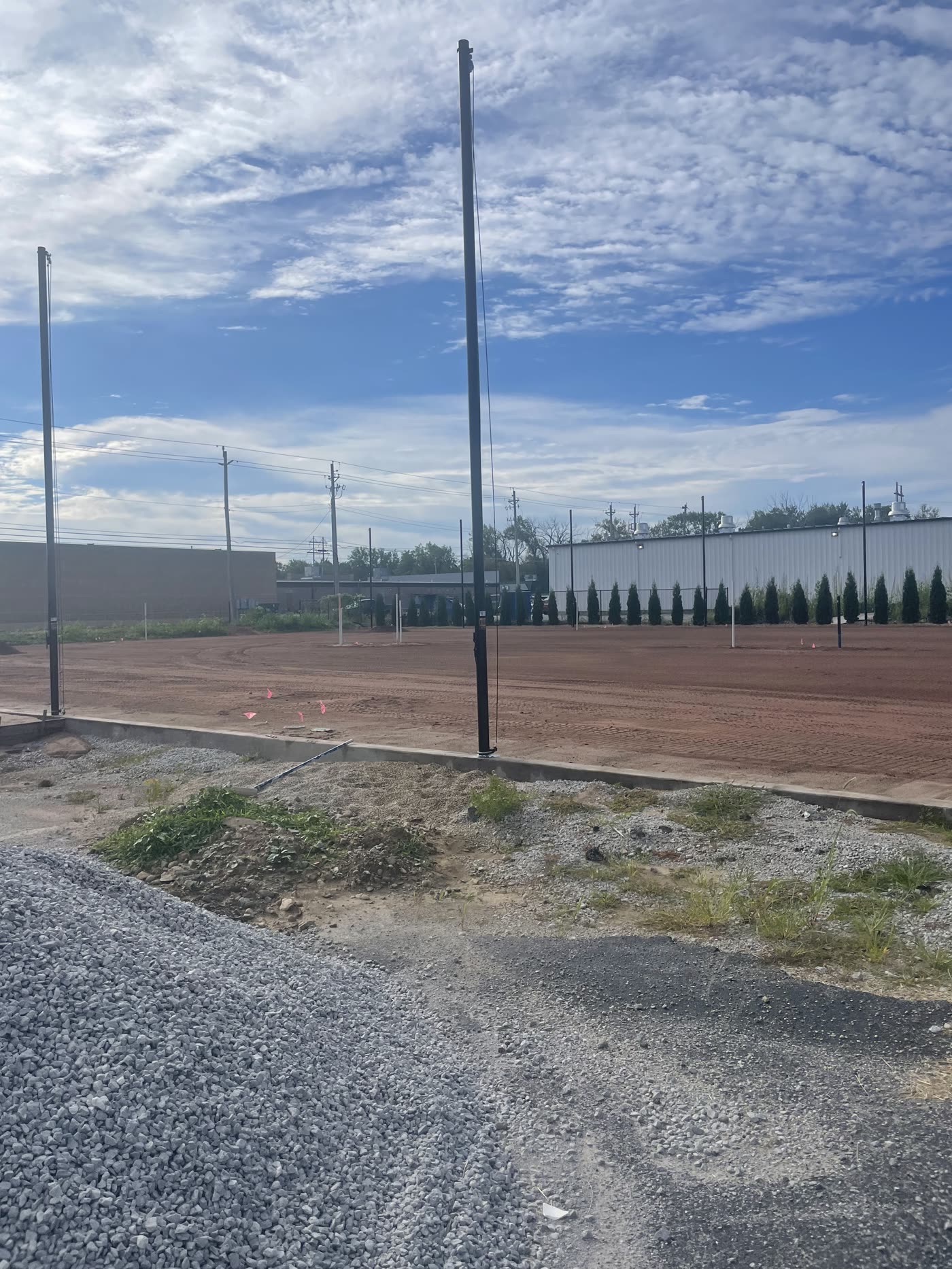
The Rootzone
An Engineered Growing Medium
GPS-leveled engineered rootzone — clay, sand, and soil placed with a flatness the eye can’t detect.
 |
 |
 |
 |
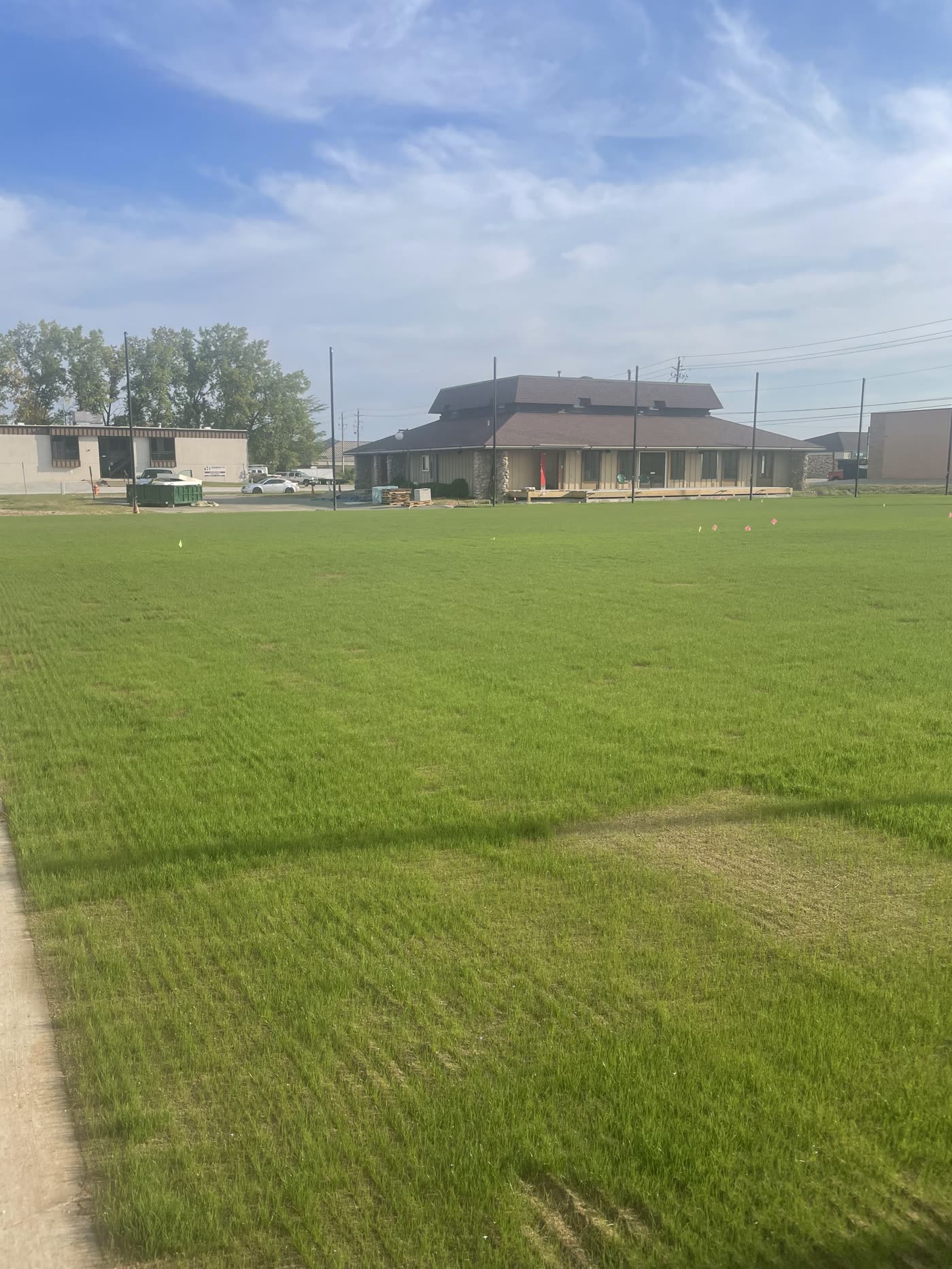
Grow-In
From Bare Rootzone to Green
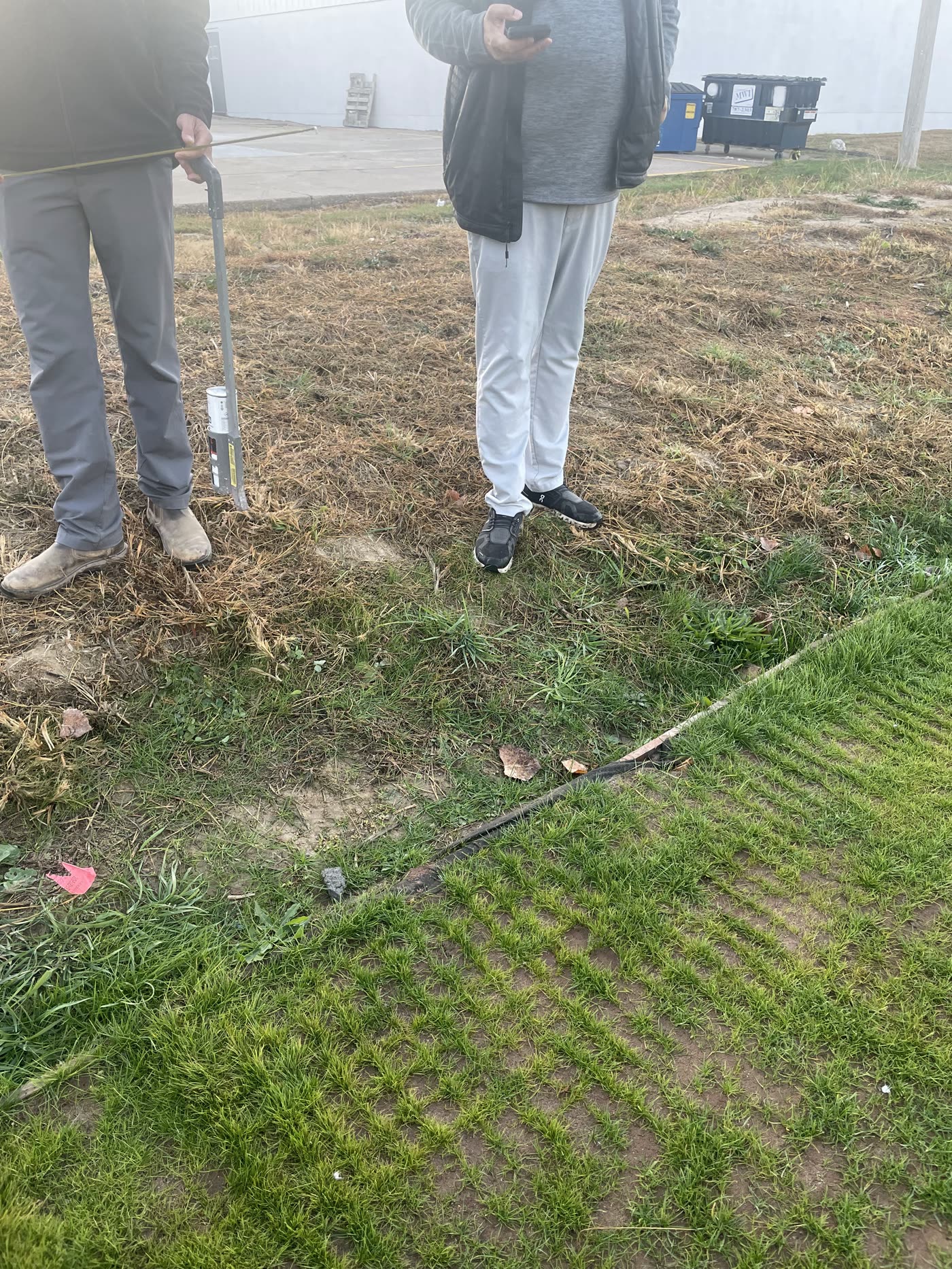
Seed rows fill in and the canopy densifies — the long wait from bare rootzone to green.
 |
 |
 |
 |
Mowing & Care
The Work of Grow-In
Reel mowers on the big pad — the work that turns a grow-in into a playing surface.
 |
 |
 |
 |
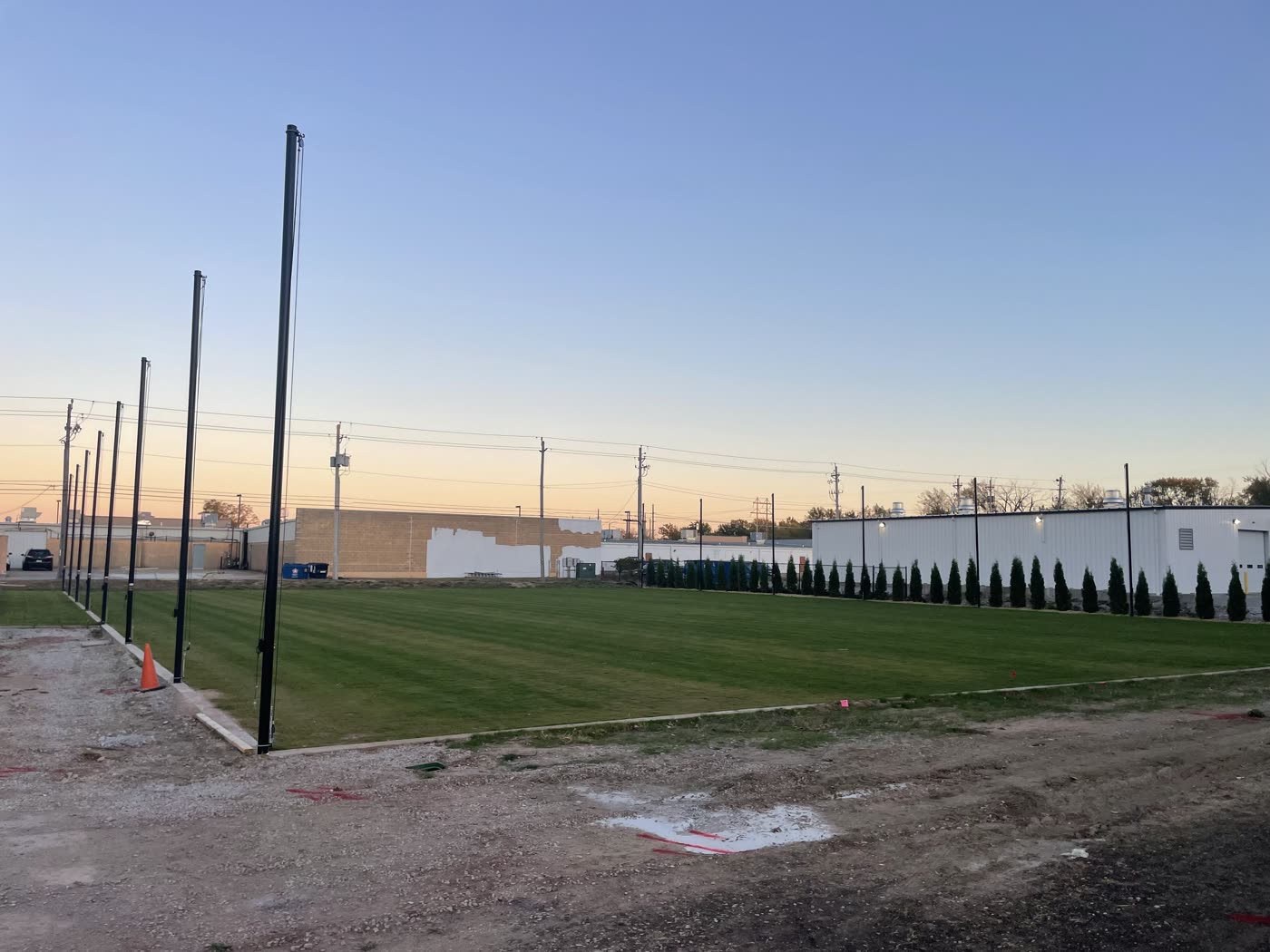
Finished Turf
The Canopy Closed
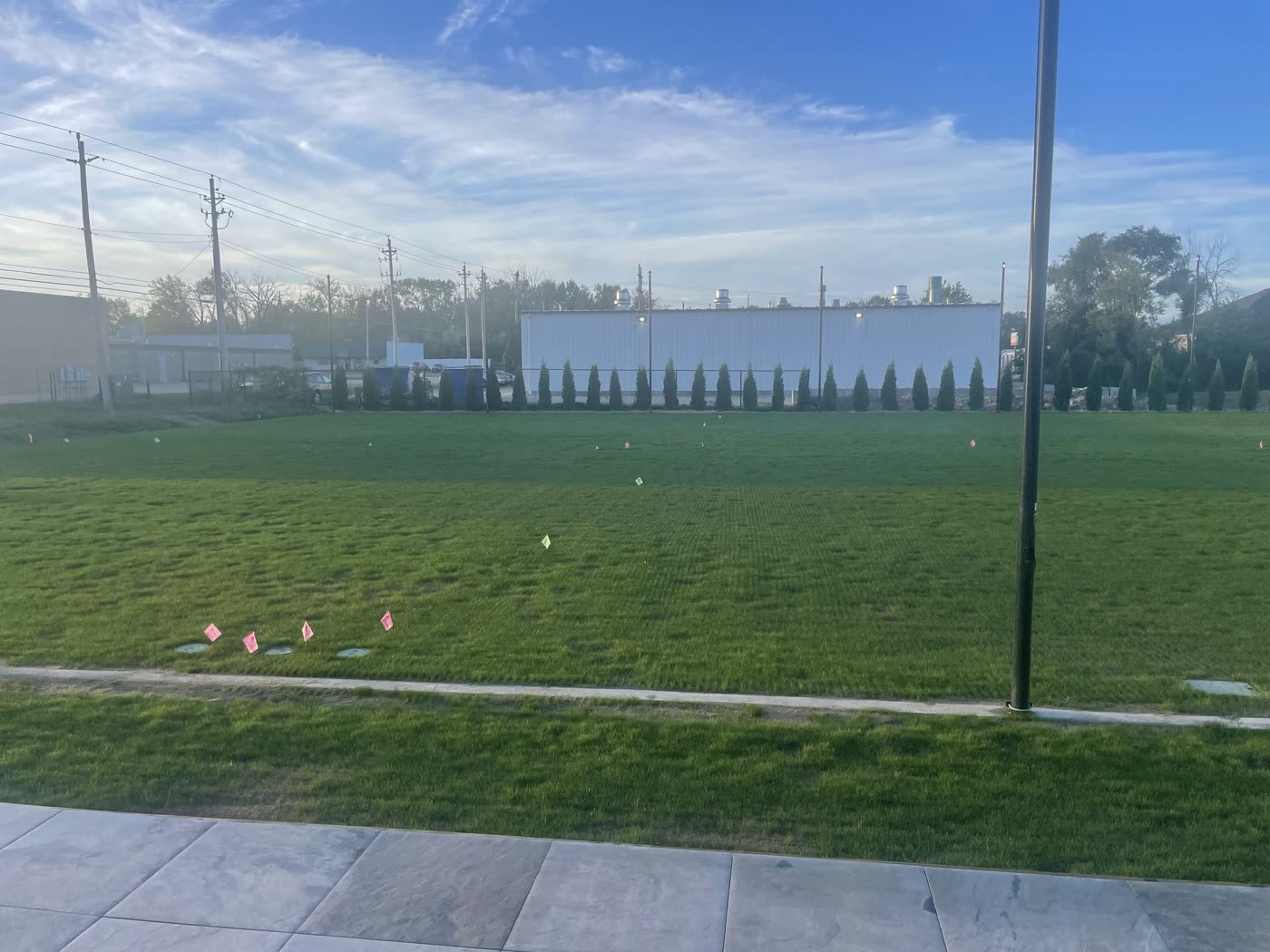
Dense, striped, and ready — the surface players came for.
 |
 |
 |
 |
 |
 |
 |
 |
Inquiries